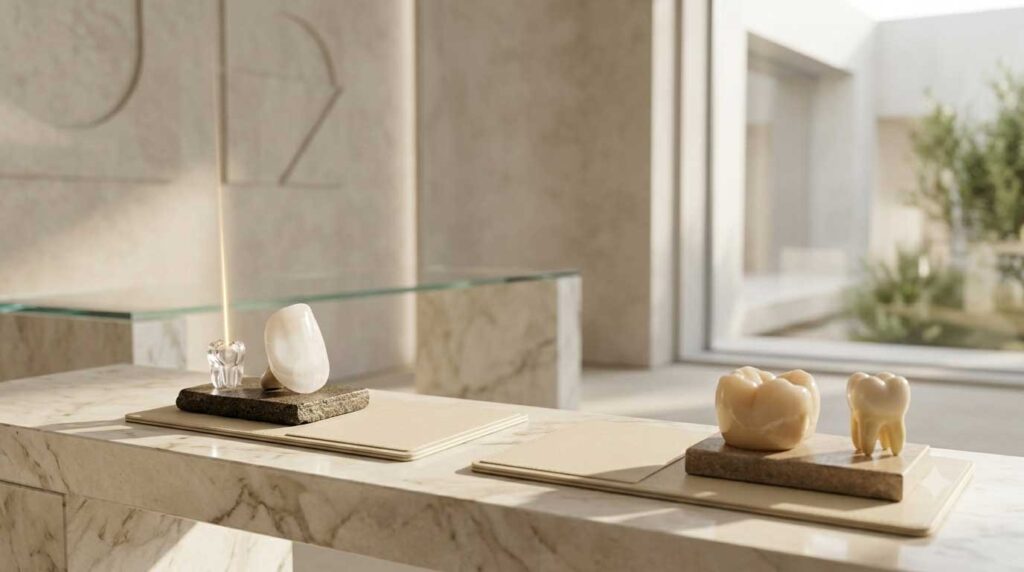


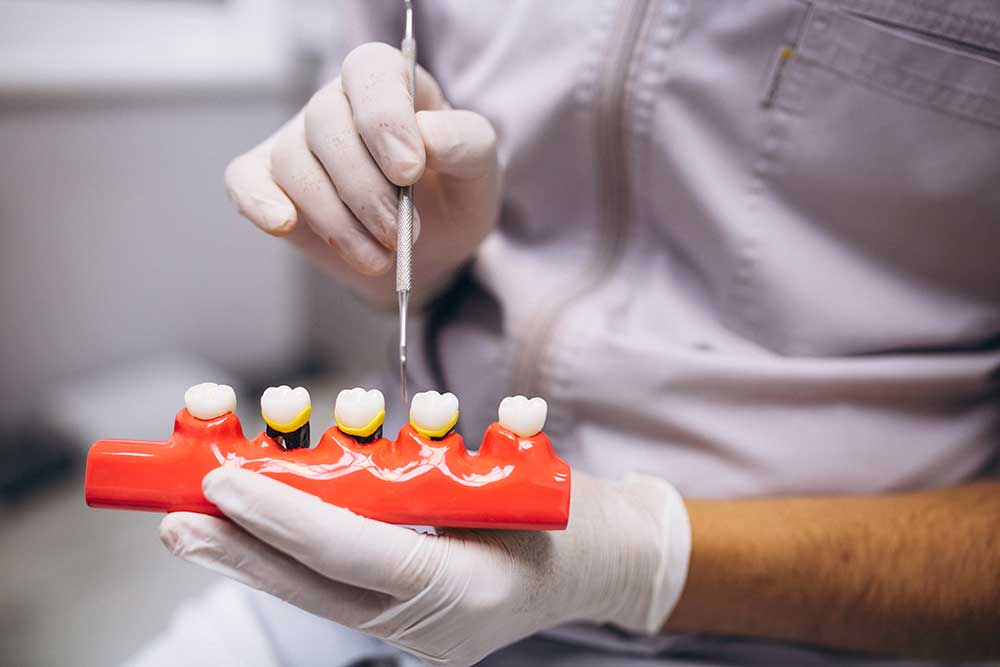
Ceramic crowns are one of the most aesthetic ways to restore damaged teeth. They replicate the color, translucency, and shape of natural enamel, making them virtually indistinguishable in a smile. These crowns are often chosen for restoring front teeth, where a natural appearance is especially important.
Let’s take a closer look at the different types of ceramic dental crowns and their key features.
Types of Ceramic Crowns
Depending on the goals of the prosthetic treatment, the clinical situation, and the patient’s budget, different types of metal-free ceramic crowns may be used.
1. Pressed Ceramic (E-max Crowns)
This material transmits light almost the same way natural enamel does, allowing the tooth to look highly natural.
Advantages:
- excellent aesthetics
- natural translucency
- ideal for front teeth
- resistant to staining
2. All-Ceramic Crowns
These crowns are made entirely of ceramic without a metal framework. This makes them hypoallergenic and safe for the gums.
Advantages:
- biocompatible material
- no metallic shadow near the gum line
- high aesthetics
- excellent light transmission
3. Zirconia-Based Ceramic Crowns
In this type, a strong zirconia framework is covered with a ceramic layer. These crowns combine durability with an attractive appearance.
Advantages:
- high strength
- long-lasting durability
- suitable for chewing teeth
- resistant to heavy biting forces
4. Hybrid Ceramic
Hybrid ceramic combines the properties of ceramic and composite polymers. Thanks to this structure, these crowns offer strength, elasticity, and good aesthetics at the same time.
Advantages:
- increased strength and resistance to chewing forces
- elasticity
- gentle on opposing teeth
- natural-looking appearance
Important to know: Hybrid ceramic crowns are more commonly used to restore chewing teeth, as well as for inlays, onlays, and small crowns, where both durability and chewing comfort are essential.
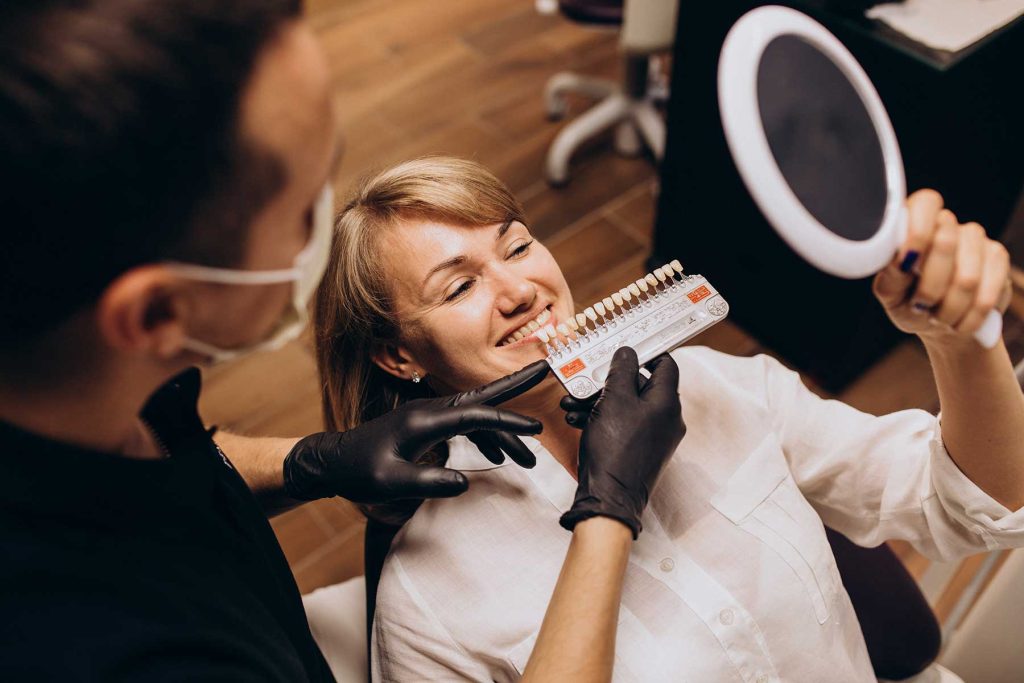
Features of Ceramic Crowns (Pros and Cons)
Ceramic dental crowns are considered one of the most advanced solutions in modern prosthetic dentistry. However, they come with both advantages and disadvantages.
Advantages:
- Natural appearance – closely mimic real teeth
- Hypoallergenic – suitable for patients with metal allergies
- Biocompatibility – well accepted by gum tissues
- Color stability – resistant to staining from food and drinks
- High precision in fabrication
- Durability – can last 10-15 years or more with proper care
- Comfort and lightness – feel natural, without the sensation of a “foreign” tooth
Disadvantages:
- Less durable than zirconia crowns under heavy chewing forces
- Require more precise tooth preparation
- Difficult to repair in case of chipping or damage
- Not always suitable for severely damaged chewing teeth
Another “weak point” is the cost of ceramic crowns. Their higher price compared to metal-ceramic crowns is due to several factors:
- complex manufacturing technology
- use of advanced digital equipment
- extremely precise modeling
- involvement of a dental laboratory
Important to know: Ceramic crowns require very precise tooth preparation, accurate impressions or digital scanning, and careful placement. The dentist’s experience and skill directly affect the crown’s fit, aesthetics, and longevity. Improper placement may lead to chipping, discomfort, or a reduced lifespan of the restoration.
Zirconia or Ceramic?
The choice between zirconia and ceramic crowns depends on several factors: the tooth’s location, chewing load, aesthetic requirements, and the clinical situation.
Important to know: To make the right choice, it’s essential to understand the key differences between these materials:
- Ceramic provides maximum aesthetics and is most often used for restoring front teeth, where a natural appearance is crucial.
- Zirconia offers superior strength, making it ideal for chewing teeth and complex dental restorations that must withstand heavy loads.
Ultimately, the final decision is made by the dentist after a thorough examination, taking into account the condition of the teeth, the bite, and the patient’s preferences.
If you are looking to get dental crowns or require a consultation to create a personalized dental restoration plan, reach out to the experienced specialists at Perfect Smile. Discover the best solutions tailored to your needs at the most competitive prices.