

Baby teeth are not merely a temporary first set of teeth that will soon fall out. They play a crucial role in the development of facial skeleton, speech and diction, proper bite formation, and even digestion. Neglecting diseases of baby teeth can lead to serious consequences, including misalignment of the dental arch, gastrointestinal disorders, and other complications.
Dentists emphasize that treating baby teeth is not a whim but a necessity. Is this really? Let’s take a closer look.
Should Baby Teeth Be Treated?
There is a common misconception that treating baby teeth is a waste of time and money. This point of view is based on the fact that temporary teeth will eventually be replaced by permanent ones. At first glance, it may seem more practical to simply extract a damaged tooth. However, this is a serious misunderstanding. Ignoring dental cavities and delaying a visit to a pediatric dentist may result in:
• The development of pulpitis in a baby tooth
• The need for complex treatment or tooth extraction
• An increased risk of improper bite formation
• Damage to the developing permanent tooth buds
• A negative first dental experience for the child
Important to Know: Baby teeth are susceptible to the same diseases as permanent adult teeth. However, they are more vulnerable because they are smaller in size, have shorter and more curved roots, and a thinner enamel layer.
Main Methods of Treating Baby Teeth
If you want your child to have healthy teeth in the future, it is important to take care of them today. What does this involve? Let’s look at the key approaches to treating baby teeth.
Firstly, which includes regular check-ups with a pediatric dentist, education on proper oral hygiene techniques, selection of age-appropriate toothpaste and toothbrush, professional dental cleaning, fissure sealing.
Secondly, early-stage dental caries can be treated using non-invasive methods without the use of a dental drill. These include:
- Remineralization therapy (applications of fluoride and calcium-containing preparations);
- Fluoride treatment;
- Enamel infiltration with specialized materials (when clinically indicated).
Thirdly, filling of baby teeth is performed when necessary. If tooth decay has progressed, the affected tissues are carefully removed and the tooth is restored with a filling using special materials such as:
- Glass ionomer cements (which release fluoride and protect the tooth);
- Composite materials (durable and aesthetic).
Fourthly, treatment of pulpitis and periodontitis may involve:
- Biological therapy – partial preservation of the pulp’s vitality;
- Pulp amputation vs pulp extirpation – removal of the inflamed portion;
- Cleaning and filling of the root canals, taking into account the anatomical features of baby teeth.
Fifthly, extraction of baby teeth is performed only when clinically indicated and when no other treatment option is possible:
- Severe crown destruction;
- Chronic inflammation;
- Risk of damage or loss of the permanent tooth bud;
- Cyst formation or enamel development disorders;
- Dental trauma.
In such cases, placement of special space-maintaining appliances may be required to preserve adequate space for the permanent tooth.
Treatment of Baby Teeth Under General Anesthesia
In certain cases, a dentist may recommend treating baby teeth under general anesthesia, such as:
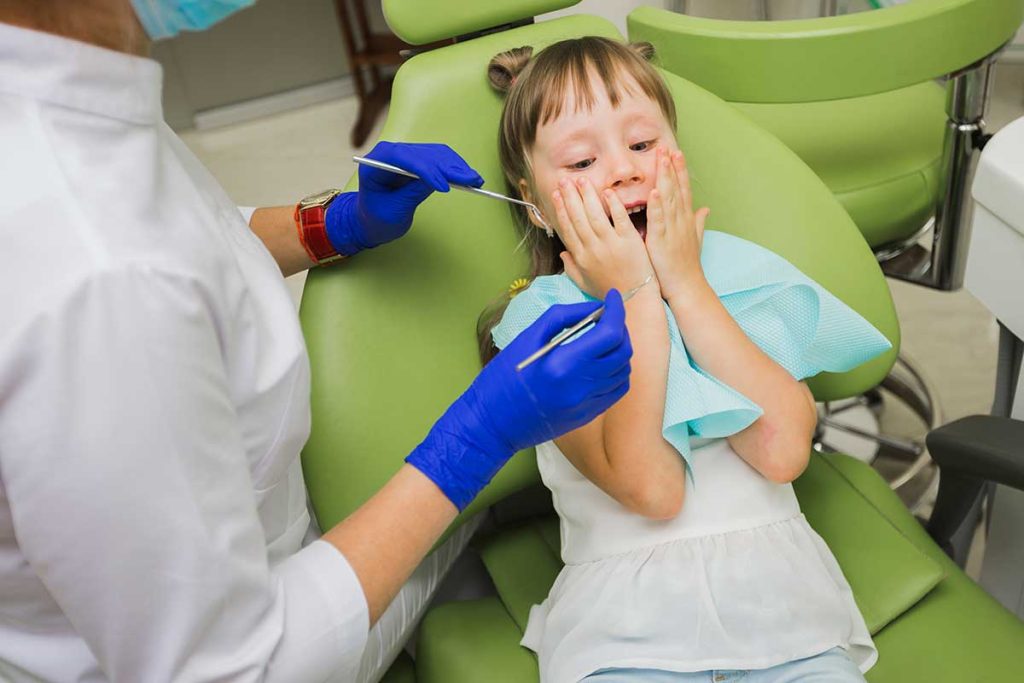
- Panic reactions or severe fear of dentist;
- Children under 3-4 years old who cannot remain seated in the dental chair;
- The need to treat multiple teeth in a single visit;
- Increased sensitivity to pain;
- Neurological conditions or developmental considerations.
Of course, in such cases, parents naturally have concerns about the safety of anesthesia. Modern pediatric anesthesiology uses short-acting medications that are quickly eliminated from the body. During sedation, an anesthesiologist monitors the child’s breathing, pulse, blood pressure, and blood oxygen level continuously. This makes the treatment of baby teeth under anesthesia as safe as possible.
Important to know: Before the procedure, the child undergoes a thorough preoperative evaluation, including a pediatric consultation, an anesthesiologist’s assessment, laboratory tests, and an ECG.
If you are unsure which treatment approach is best for your child, schedule a consultation with a pediatric dentist in Yerevan – the doctor will recommend the safest and most suitable option for your child’s specific needs.
Take care and stay healthy!