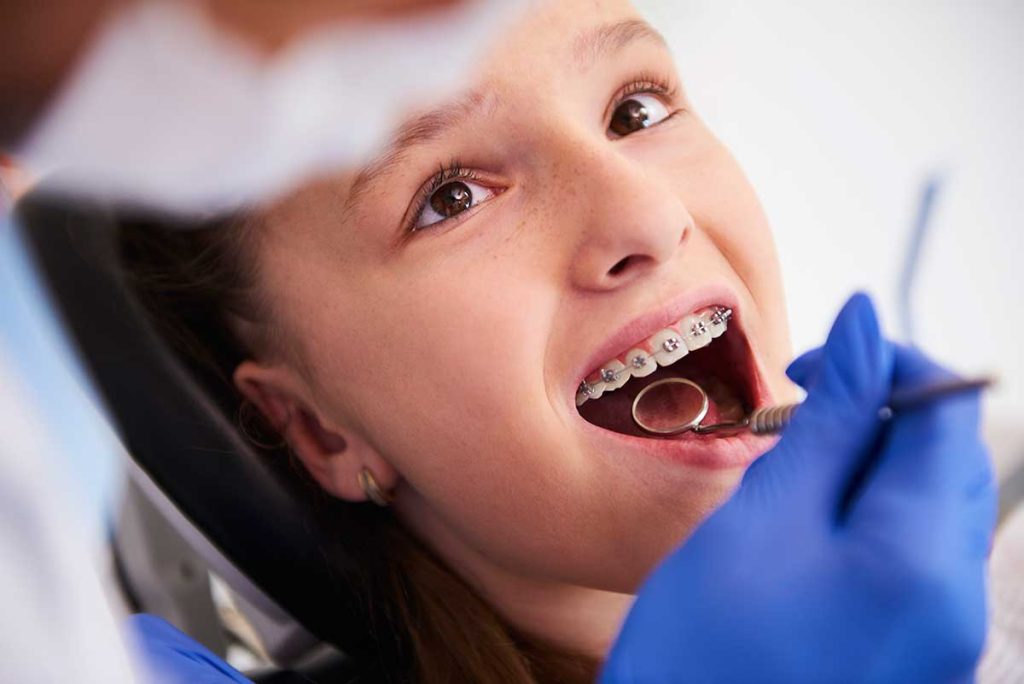



A naturally beautiful smile in a child isn’t simply a gift, it’s the result of the careful, proactive efforts of forward-thinking parents. Taking care of teeth from an early age helps prevent issues with bite alignment, speech, and even posture. Today, pediatric orthodontics allows to detect and correct jaw and teeth alignment issues early.
When to visit an orthodontist and why waiting isn’t a good idea
In general, the earlier you consult an orthodontist, the better the results. Many issues are easier, faster, and more effective to address during childhood. Children aged 5-7, when the first permanent molars begin to emerge, are recommended to have a preventive orthodontic check-up. This is important because the severity of potential problems is not always visible to the naked eye.
In some cases, it’s immediately obvious that a visit to a specialist should not be delayed. For example:
- Teeth are crooked or overcrowded
- The child complains of discomfort while chewing
- Frequently bites the cheek or lips
- The lower jaw is significantly protruded or receded
- The child breathes through the mouth or snores often
- There isn’t enough space for permanent teeth to emerge
- The smile appears uneven, or the teeth do not align properly when the mouth is closed
- The child has harmful habits such as thumb-sucking, lip-biting, or tongue-thrusting
- Baby teeth were removed early due to cavities
There is a common misconception among parents that they can simply wait, avoiding the expense, stress, and time, because it will all sort itself out once all the permanent teeth come in. But you can’t just leave things to chance! Many orthodontic problems, including misaligned bites, abnormal jaw growth, increased risk of cavities and gum disease, and speech defects tend to worsen as the child grows.
Orthodontic Treatment
Today, orthodontic treatment for children is not limited to traditional braces. Comfortable removable appliances, mouth guards, silicone or polyurethane trainers, and digital diagnostics are also widely used. These options make treatment more effective, predictable, and psychologically comfortable for the child. Let’s take a look at some common pediatric orthodontic methods:
- Removable orthodontic plates — help expand the jaw and correct the position of teeth.
- Trainers and mouth guards — soft appliances used to correct bite issues and harmful habits.
- Fixed appliances (e.g., palatal expanders) — used when clinically indicated.
- Braces — most often used in adolescents once the permanent teeth have erupted.
The treatment plan is tailored to each child after a careful examination and diagnostic evaluation.
The Psychological aspect: How to encourage your child
Even if parents understand why an orthodontic consultation is important, a child may feel afraid of the dentist, not want “metal in their mouth,” or simply refuse to go. A proper psychological approach can help prevent tears and tantrums, while building trust in dental professionals that lasts for years. The best way to prepare your child for an orthodontic visit is:
- Speak honestly and simply. For example: “The dentist will check how your teeth are growing and show you how to make your smile even more beautiful.”
- Give positive examples. Share stories about how an orthodontist helped you or a friend, and how their smile improved.
- Avoid threats. Don’t say: “If you don’t go to the dentist, your teeth will be crooked.” This only increases fear and resistance.
- Explain the benefits.
“It will be easier for you to chew.” “You’ll be able to pronounce all sounds clearly.” “Your teeth will be straight and beautiful.” “Your smile will look amazing.”
Checklist for choosing a clinic and dentist
A child’s first dental experience shapes their attitude toward treatment for years to come. It’s important to select not only a clinic but also a dentist your child feels comfortable with.
When choosing a pediatric dentist, pay attention to these 8 key points:
- The clinic has a pediatric dentist.
- The dentist is experienced with children and treats them without causing fear.
- Friendly communication and proper child adaptation.
- Modern, gentle treatment methods.
- Availability of sedation or treatment under general anesthesia (when indicated).
- A child-friendly waiting area with cartoons and toys.
- Clear treatment plan and transparent pricing.
- Genuine reviews from other parents.
Perfect Smile Children’s Dental Clinic provides all of the above-mentioned conditions, and exclusively specially trained pediatric dentists work with children, who form the correct psychology and attitude towards dental procedures in the child.
Take care of your health from a young age!